
Attendance, $80–$180
The Sydney-standard call-out fee. We name ours on the phone before you commit to anything, hold anyone who won’t to that standard.
When water is coming through the ceiling, the useful question is not "who opens at eight", it is "who answers now". We do. Around the clock across Seven Hills, a licensed plumber picks up, talks you through making it safe, and gets a crew moving.
The honest test: is water, waste or gas going somewhere it should not, and getting worse while you watch? A burst pipe, sewage backing up into the shower, a hot water tank dumping its load through the ceiling, or any smell of gas, those are emergencies, and waiting until morning multiplies the damage bill. Your first move for a burst pipe is the water meter: turn the stop valve clockwise and the flooding stops while we drive.
Then there is the category people apologise for calling about, the toilet that will not flush in a one-bathroom house, the blocked drain the night before an inspection, no hot water with a newborn at home. Call anyway. We run genuine 24/7 coverage across Seven Hills, Blacktown, Toongabbie, Kings Langley and the wider Western Sydney, and an after-hours call gets a plumber, not a promise of one tomorrow.


The slowest part of an apartment emergency is often not the plumbing, it is the door. Fob access, a basement that needs a resident to open it, a car park with no after-hours entry: any of those can add half an hour while water is still running.
The suburb’s townhouse and duplex complexes share drainage that blocks from combined waste and is easy to overload.
Two things worth doing before you ever need them: find your lot's isolation valve, usually in the laundry or a hallway cupboard, and save the building manager's after-hours number in your phone. Both take five minutes on a calm evening and both save real time on a bad one.
Steep driveways, stairs down to the door, and no clear place to park all cost minutes in daylight and more after dark.
Many Seven Hills homes date from the postwar boom and still run brittle clay lines that crack with age and let roots and soil in.
It helps enormously if someone can meet the crew at the street with a light on. And if your property has a hard access point, a locked side gate, a shared drive, a set of steps that is the only way in: tell us on the phone rather than when we arrive. It changes what comes off the van and how.
Most homes around Seven Hills have an overflow gully outside, a low grate, often near the back step, that nobody thinks about until it matters. It is deliberately set below the lowest fixture indoors so that when the line blocks, it spills into the garden instead of through your floor.
Shallow stormwater lines and flat pockets struggle in heavy Western Sydney rain, backing gullies up and flooding low yards.
So a gully running in heavy rain is not a fault. It is the system doing its job and telling you the line downstream of it has stopped taking water. That is the moment to call, not after it reaches the hallway.
Seven Hills (postcode 2147) sits in the heart of Western Sydney, bordered by Blacktown, Toongabbie, Kings Langley and Lalor Park. A mix of postwar homes and newer townhouse developments means its drains face everything from tree roots to shared-line blockages, and we know them well.
In a block, a single blockage low in the stack shows itself in whichever apartment sits lowest, which is frequently not the apartment that caused it. If your ground-floor shower is backing up when the neighbours run water, the line is telling you the problem is downstream of all of you.
That is worth knowing before anybody starts apportioning blame or cost. A camera up the stack settles it in twenty minutes, and the footage is what the strata manager needs to act on rather than a description of what somebody saw.
A yard that floods in every serious downpour is a different problem from one that flooded once in a freak storm. The first is a blocked or undersized line and it will keep happening; the second is weather.
Telling them apart takes a camera on a dry day, not a guess in the rain. If it has happened twice, book the inspection between storms, clearing a surcharging pit at the height of it costs more and tells you less.
The Sydney-standard call-out fee. We name ours on the phone before you commit to anything, hold anyone who won’t to that standard.
Business hours runs roughly $120–$160; after-hours sits higher because a licensed plumber is out of bed for you.
Call-out plus early labour plus minor parts covers the bulk of real after-hours jobs: bursts, blockages, failed valves.
Under-slab leaks, gas line faults, anything opening walls in the small hours. The number is agreed with you first, always.
Contained, isolated, water off? We will tell you it can wait and book daylight rates. Honesty is cheaper than urgency.
No number is invented after the fact, you approve the price before work starts, 2pm or 2am. Figures here are indicative of the 2026 Sydney market rather than a quote from us, you get your own number as a fixed price before any work starts.
You describe it; we tell you what to isolate right now, and give you a real ETA, plus an honest "this can wait" when it genuinely can.
Crews run stocked for the common failures, pipe and fittings, valves, flexi hoses, drain machines: so the fix does not wait for a supplier to open.
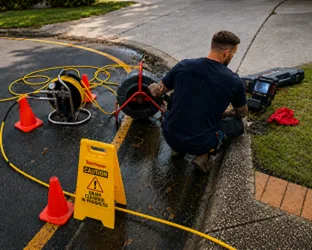
Damage gets stopped before anything else. Then you see a fixed price for the repair and decide with the number in front of you.

Nearly every emergency gets its permanent fix on the spot. Where a part truly has to wait, you are left watertight and working until it lands.
Describe it and let us make the call with you. Genuine can-wait jobs get booked at daylight rates, genuine emergencies get a crew now.
Call for the fastest response, any hour. Or send the form, after-hours enquiries get a callback from the on-call plumber, not an inbox.

Leave your details and our local Seven Hills team will call you back fast.