
Basic detection, $200–$400
Straightforward jobs: a limited pipe run, good access, the leak confirmed and marked.
The water bill knows something you don’t. Somewhere under a slab or behind a wall in Seven Hills, a pipe is quietly feeding the ground, and finding it with instruments instead of a jackhammer is the difference between lifting three tiles and gutting a bathroom. We locate to centimetres, then repair through one deliberate hole.
A concealed leak cannot keep all three of its secrets. It makes a sound, pressurised water escaping sings in frequencies acoustic gear tracks along the pipe. It changes temperature, the wet path, or the warm plume of a leaking hot line, paints itself across thermal imaging. And it loses pressure, isolate the pipework section by section against a gauge, and the guilty run confesses while the innocent ones hold steady.
One signal narrows it; three signals convict. Where the readings intersect we mark the surface, and that mark is routinely metres from where instinct says to dig, especially under Seven Hills’s renovated homes, where pipe runs wander in ways no drawing ever recorded. Every centimetre of accuracy is a tile that stays on the floor.
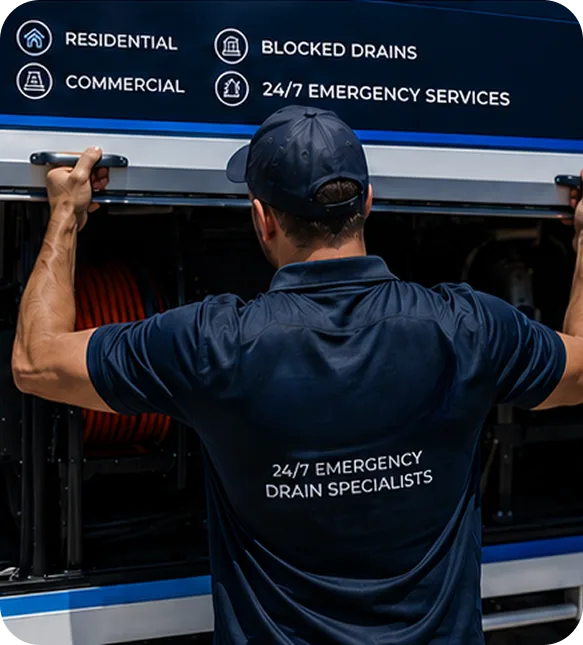

Failed waterproofing in a shower is the single most frequent source of inter-lot water damage in strata, and it rarely presents as a leak at all, it presents as a damp patch on a neighbour's ceiling months after the membrane gave up.
The suburb’s townhouse and duplex complexes share drainage that blocks from combined waste and is easy to overload.
It is worth ruling in or out early because it is a building repair rather than a plumbing one, and the process for approving and funding it is different. Flood testing the recess is inexpensive and definitive.
Many Seven Hills homes date from the postwar boom and still run brittle clay lines that crack with age and let roots and soil in.
Sloping blocks are full of retaining structures, and pipework often runs behind or beneath them because there was nowhere else to put it. A leak in that position saturates backfill, and saturated backfill is what makes retaining walls move.
Water showing at the base of a wall is worth treating as urgent even when the volume looks trivial. The plumbing repair is small compared with what the wall costs.
A cracked earthenware line leaking into its own trench washes out the bedding supporting it. Losing support, the pipe sags; sagging, it holds water; holding water, it collects solids and eventually blocks.
Which is why a drain that has begun to block regularly and a drain that is leaking are frequently the same drain at different stages. Finding it early is considerably cheaper than finding it once it has collapsed.
Seven Hills (postcode 2147) sits in the heart of Western Sydney, bordered by Blacktown, Toongabbie, Kings Langley and Lalor Park. A mix of postwar homes and newer townhouse developments means its drains face everything from tree roots to shared-line blockages, and we know them well.
The technical question and the financial question have different answers, and both need settling. Pipework serving only your lot is yours; risers, mains and common-property lines belong to the owners corporation.
A leak detection report that names the line, the lot and the direction of travel is what turns a dispute into a decision. That is what we write, because a description of where the water appeared settles nothing.
A persistent sewer smell around a property with no obvious source is worth investigating properly. It usually means either a dry or failed trap, or a break in a line venting where it should not.
A smoke test finds both quickly, introduce smoke into the system and watch where it emerges. It is unglamorous, cheap, and conclusive in a way that sniffing around is not.
It is free, it takes an hour, and it settles whether you have a leak at all. Turn off every tap and appliance that uses water, then read your meter, including the smallest dial or digits.
Come back an hour later without using anything. If the reading has moved, water is leaving the property somewhere. If it has not, whatever you are seeing is not a pressurised leak, and that rules out a large and expensive category before you spend anything.
Detection is a process of elimination, not a single instrument. Isolate sections and watch the meter to establish which line is losing water. Listen along it with acoustic equipment for the sound pressurised water makes escaping.
Where that is inconclusive, plastic pipe, deep runs, noisy ground, tracer gas is introduced into the isolated line and detected at the surface. Thermal imaging helps on hot water lines and under floors.
Straightforward jobs: a limited pipe run, good access, the leak confirmed and marked.
The standard concealed-leak hunt with the full kit on site, acoustic, thermal, pressure testing.
Long pipe runs, poor access or multiple leaks add gauge-and-listen time past the first hour.
Deep slab lines and complex multi-storey tracing sit at the top of the Sydney range.
Detection tells you exactly what the repair involves, so the repair quote is built on evidence. One crew does both, no handover, no second call-out fee.
The comparison to hold onto: exploratory demolition costs more than detection before its first guess is even wrong. Figures here are indicative of the 2026 Sydney market rather than a quote from us, you get your own number as a fixed price before any work starts.

Meter protocol, bills, history. If the evidence says no supply leak, you hear that for free, not a finding fee for nothing.
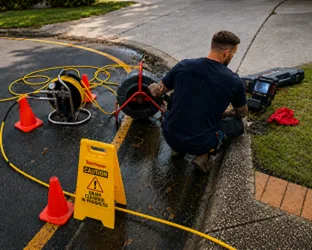
Section-by-section pressure isolation, hot against cold, run against run, until exactly one line owns the loss.

Thermal and acoustic sweeps along the guilty run until the signals stack on one spot. That mark is where, and only where, we open.
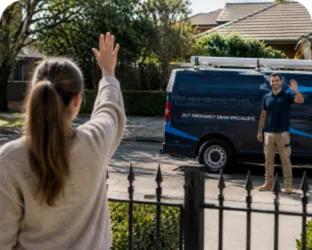
Access at the mark, section repaired, pressure re-tested, surface closed. A run in terminal condition gets reroute numbers before, not after.
Then it is real, running, and billing you daily. Detection this week beats discovery through a ruined floor next month.
Instruments, a mark on the floor, one hole, one fix: and the meter finally standing still.

Leave your details and our local Seven Hills team will call you back fast.