Common repairs, $150–$600
Elements, thermostats, thermocouples, relief valves: the parts that actually fail, fixed in a single visit. Most no-hot-water calls land here.
Cold water at 6am feels terminal, but the autopsy usually finds a $40 part, not a dead system. We test before we talk replacements, carry the common failures on the van, and put Seven Hills households back under hot showers the same day, saving the new-system quote for tanks that have honestly earned one.
Most of the no-hot-water calls we take in Seven Hills end in a repair, not a skip bin. Electric systems lose elements and thermostats; gas systems lose thermocouples and pilot assemblies; continuous-flow units throw error codes that mean a sensor or a flow problem, not a dead unit. Those are parts, they are stocked on the van, and the fix is measured in hours.
The industry default is the opposite, quote a shiny new system to anyone whose water went cold, because a replacement is worth ten times a thermostat. We diagnose first. A five-year-old tank with a failed element deserves an element. What it does not deserve is a $2,000 replacement because someone could not be bothered testing a $40 part.
A storage tank holds a lot of water, and in a block it has neighbours underneath. A slow leak that would be a nuisance in a house is a damage claim in an apartment.
Capacity complaints are usually a sizing problem rather than a fault: two showers at once, or a bath while the dishwasher runs, exceeding what the unit was specified to deliver. Worth diagnosing before replacing anything.
If yours sits in an internal cupboard, check that the safe tray beneath it drains somewhere and is not blocked with dust and lint. That tray is the only thing between a failed tank and the ceiling below, and it is almost never inspected.
With 84.1% of Seven Hills dwellings recorded as separate houses by the ABS 2021 Census, above the NSW figure of 65.6%, almost every system we attend is a storage tank in a garage, side passage or external alcove.
Instantaneous units suit apartments well: no stored water to fail into the building, no cylinder taking up a cupboard, and no recovery time when several people shower in sequence.
The trade-off is that they need adequate gas supply and correct flue arrangements, which in an older block is not always straightforward. It is worth establishing what the building can actually accommodate before choosing a replacement.
In an apartment this is the first question, because it decides who arranges and pays for everything that follows. A unit inside your lot serving only your apartment is yours. A central plant serving the building, or a unit sitting on common property, is the owners corporation's.
Check your strata plan before you authorise work, not after. It is the difference between a bill you owe and one you can hand on.
Stored water is deliberately kept at 60 degrees to suppress bacteria, then tempered down to a safe 50 at the tap. If your hot has become scalding, the tempering valve has usually failed, and that is a genuine safety issue in a house with children.
If it has become lukewarm, the same valve is a likely culprit before the heater is. Either way it is a small part, and it should be checked before anybody discusses a new system.
Inside every storage cylinder is a sacrificial anode that corrodes so the steel does not. When it is consumed, the tank starts consuming itself, and that is the point of no return.
Replacing an anode costs a fraction of replacing a tank and roughly doubles its service life. Almost nobody does it, because almost nobody is told it exists, which is why it is here rather than in the fine print.
Three things decide it: the age of the unit, the cost of the failed part, and whether the cylinder itself is sound. A tank under about eight years old with a failed element, thermostat or valve is almost always worth repairing.
A tank that has rusted through is finished, and no part saves it. We would rather tell you that than sell a repair that buys a month, and you should expect to be shown why, not just told.
Running costs, roughly and in order: heat pump cheapest, gas continuous next, electric storage on a controlled-load tariff after that, and electric storage on a standard tariff most expensive by a wide margin.
Purchase price runs almost exactly in reverse, which is why the right answer depends on how long you intend to be in the house. We will do that arithmetic with your figures rather than recommend a category.
Elements, thermostats, thermocouples, relief valves: the parts that actually fail, fixed in a single visit. Most no-hot-water calls land here.
Gas valves, control boards on continuous-flow units, and bigger jobs on systems still worth the spend.
Like-for-like replacement when the tank is done. Gas storage runs $1,200–$2,200 installed.
Endless hot water, no tank to rust, and it frees the space the cylinder occupied.
After rebates. Costs the least to run of the lot, worth the numbers conversation on any replacement, not just the green one.
You see the repair number and the replacement number together, the decision is yours, made with both in hand. Figures here are indicative of the 2026 Sydney market rather than a quote from us, you get your own number as a fixed price before any work starts.

System type, age and symptom over the phone lets us load the probable part before leaving, that is what makes same-day genuinely same-day.
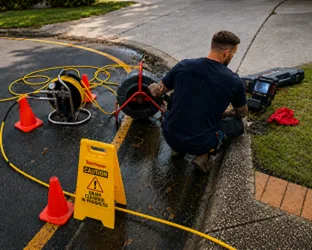
Multimeter on elements, sequence checks on gas, codes read on continuous flow. The diagnosis comes off the meter, never off a sales target.
Repairable means repaired now. End-of-life means the repair and replacement prices side by side, with our reasoning, then your call, unhurried.
Replacements go in with tempering valve, relief drain and compliant connections, old unit gone, and hot water flowing: usually the same day.
Call before 10am and in most cases the water is hot again tonight. Describe the system and we bring the likely fix on the van.
Diagnosis first, honest numbers second, hot water third: usually all on the same day.

Leave your details and our local Seven Hills team will call you back fast.